
If you’re new to maintenance planning, the terminology alone can feel like a wall — PM, CBM, PdM, MTBF, CMMS. Underneath the acronyms, though, the basics of preventive maintenance are actually straightforward. This guide starts from zero and walks through everything a beginner needs to understand before building their first PM program: what preventive maintenance is, the different types, its real advantages and limitations, and the building blocks of a program that actually holds up in practice.
What Is Preventive Maintenance?
Preventive maintenance (PM), sometimes spelled preventative maintenance, is planned maintenance work carried out on equipment before it fails, rather than after. It’s considered a proactive strategy, and it sits at the core of effective facilities and asset management.
PM covers a wide range of routine work — cleaning, lubricating, inspecting, calibrating, and replacing worn parts — scheduled in advance rather than triggered by a breakdown. At a facility level, it also includes upkeep of building systems: HVAC servicing, electrical inspections, lighting checks, and fire safety testing.
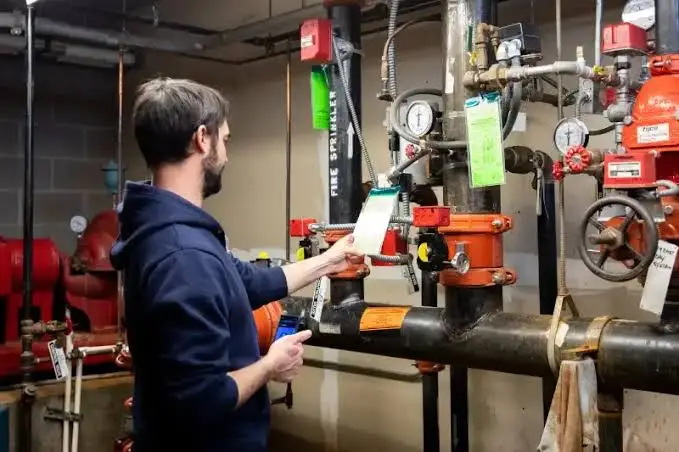
A useful way to picture it: most people already practice a version of preventive maintenance in daily life without calling it that. Checking tire pressure or changing your car’s engine oil on a set interval is preventive maintenance applied to a vehicle. Facilities and industrial teams do the same thing at a much larger scale, across hundreds or thousands of assets.
The Basics of Preventive Maintenance: Advantages and Disadvantages
Before adopting any maintenance strategy, it helps to understand both sides of it. PM is widely recommended, but it isn’t free of trade-offs.
Advantages
- Extended asset lifespan. Keeping equipment serviced and running within its design tolerances helps it reach its full expected life, delaying costly replacement.
- Cost savings. Scheduling maintenance in advance avoids the premium cost of emergency repairs and gives teams better control over spare parts spend.
- Reduced unplanned downtime. Catching issues during a scheduled visit, rather than after a failure, keeps operations running with fewer disruptions.
- Better workplace safety. Routine inspections surface hazards — worn wiring, leaking seals, failing components — before they cause an incident.
- Improved sustainability. Fewer emergency callouts and less overstocked spare-parts inventory both reduce operational waste.
Disadvantages
PM is genuinely valuable, but a few limitations are worth knowing upfront, especially as a beginner:
- It requires upfront investment of time and process. Building an asset inventory, writing checklists, and setting intervals takes real planning work before any benefit is realized.
- Over-scheduling is a real risk. Performing maintenance more often than an asset actually needs wastes labor and can even introduce new problems through unnecessary handling.
- PM alone isn’t always the most cost-effective strategy. Time-based PM performed strictly on a calendar, regardless of an asset’s actual condition, can mean servicing healthy equipment unnecessarily. Many mature programs blend preventive maintenance with condition-based or predictive approaches once they outgrow a purely calendar-driven schedule — a distinction covered in more depth in this comparison of predictive vs. preventive maintenance.
- It doesn’t eliminate failure entirely. PM lowers the likelihood and severity of breakdowns; it doesn’t guarantee equipment will never fail.
The 5 Types of Preventive Maintenance Every Beginner Should Know
Not all preventive maintenance works the same way. There are five recognized types, and most mature programs use a mix of them depending on the asset.
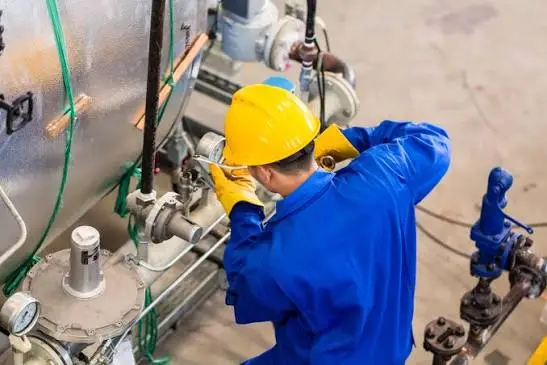
1. Time-based maintenance (TBM). Work is scheduled at fixed calendar intervals, usually based on manufacturer recommendations. Weekly inspections on critical production equipment are a common example.
2. Usage-based maintenance (UBM). Maintenance is triggered by a usage metric instead of a date — operating hours, cycle counts, or mileage. A fleet vehicle due for an oil change every few thousand miles is a classic case.
3. Condition-based maintenance (CBM). Sensors or inspections monitor an asset’s actual performance data, and maintenance is triggered when readings — vibration, temperature, pressure — cross a defined threshold.
4. Predictive maintenance (PdM). Historical and real-time data, often combined with machine learning, is used to forecast when a failure is likely before any visible symptoms appear.
5. Prescriptive maintenance. The newest and most advanced type. Where predictive maintenance flags that a failure is likely, prescriptive maintenance goes a step further and recommends the specific corrective action needed to prevent it.
Beginners generally start with time-based and usage-based maintenance, since both are simple to schedule without needing sensor infrastructure, then layer in condition-based or predictive approaches for their highest-value assets as the program matures.
Preventive vs. Reactive Maintenance: The Core Distinction
The single biggest concept to grasp as a beginner is the difference between preventive and reactive maintenance, and it comes down to timing.
Reactive maintenance — sometimes called run-to-failure — means equipment is only serviced once it has already broken down. Preventive maintenance flips that order: work happens on a planned schedule, before failure occurs.
The financial gap between the two is significant. Emergency repairs under a reactive model are typically far more expensive than the same repair completed on a planned basis, once rush labor, expedited parts, and lost production time are factored in. Facilities running industrial or production equipment tend to feel this gap most acutely — for a closer look at how the basics apply at scale, see this guide to industrial preventive maintenance.
The Basic Building Blocks of a Preventive Maintenance Program
Once the concepts are clear, building an actual program comes down to a handful of foundational steps:
- Build an asset inventory. You can’t schedule maintenance for equipment that hasn’t been catalogued — location, make, model, and condition all need to be documented first.
- Prioritize by criticality. Not every asset needs the same attention. Rank equipment by the cost and risk of failure, and focus the most frequent PM on the highest-priority assets.
- Write checklists for each task. A PM checklist should specify exact steps, measurements to record, and pass/fail criteria, so the work is consistent no matter who performs it.
- Set your intervals. Start with manufacturer guidance, then refine using your own failure data over time.
- Put it into a system. Spreadsheets work for a handful of assets; anything larger needs a system that can generate and track work orders automatically.
For beginners setting up their very first program, it’s worth following a proper sequence rather than trying to schedule everything on day one — this step-by-step guide to starting a preventive maintenance program walks through exactly that. Once the basics are running, teams typically move on to building a full preventive maintenance schedule and, for machinery-heavy environments, using ready-made PM schedule templates to speed up the initial setup.
Basic KPIs to Track From Day One
Even a beginner program benefits from tracking a few simple numbers rather than waiting until things get complicated:
- PM Compliance Rate — the percentage of scheduled PMs completed on time. It’s the easiest metric to start with, though it’s worth understanding early on how PM compliance can become a misleading number if it’s tracked without also checking the quality of the work.
- Mean Time Between Failures (MTBF) — how long an asset runs, on average, between unplanned failures. A rising MTBF is a strong early sign the program is working.
- Mean Time to Repair (MTTR) — how long it takes to get an asset back in service after a failure. This tends to fall as a PM program matures and issues are caught while still small.
Common Mistakes Beginners Make
A few pitfalls come up repeatedly with new PM programs:
- Writing vague checklists. “Inspect equipment” isn’t a task — it’s a placeholder. Every checklist item needs a specific action and a pass/fail standard.
- Scheduling too much, too soon. Trying to put every asset on a rigorous PM schedule in the first month usually leads to a backlog no one can keep up with.
- Skipping the “why” behind each task. PM tasks copied from a generic checklist without understanding the failure they’re meant to prevent tend to get skipped once workloads increase.
These are covered in more depth in this guide to doing preventive maintenance the right way, which is worth a read once the basics here feel familiar.
Frequently Asked Questions
What are the basics of preventive maintenance? The basics come down to four things: understanding what PM is (planned maintenance before failure occurs), knowing the different types (time-based, usage-based, condition-based, predictive, and prescriptive), building an asset inventory and checklists, and tracking a few core metrics like PM compliance and MTBF.
Is preventive maintenance the same as preventative maintenance? Yes — both spellings refer to the same concept. “Preventive” is more common in North American usage, while “preventative” appears more frequently elsewhere, but they describe the exact same maintenance strategy.
What’s the easiest way to start learning preventive maintenance as a beginner? Start with time-based and usage-based maintenance on your most critical assets, since they don’t require sensor infrastructure. Build a simple asset list, write basic checklists, and track PM compliance before adding more advanced strategies like condition-based or predictive maintenance.
Is preventive maintenance always the best strategy? Not on its own. Purely calendar-based PM can lead to servicing healthy equipment unnecessarily. Most mature programs combine preventive maintenance with condition-based or predictive methods for their highest-value assets, rather than relying on one approach for everything.
Getting the Right Facility Tools in Place
Learning the basics of preventive maintenance is the first step; putting them into practice at scale requires the right facilities management software behind it. A good facility management solution should let a team build an asset inventory, attach checklists, and generate PM work orders automatically from time or usage triggers, without relying on spreadsheets that fall out of date. FacilityBot is a cloud based CMMS software platform built for exactly this, giving beginners and experienced maintenance teams alike a single place to manage assets, schedules, and compliance tracking. Its integrated fault reporting software also means that even before a formal PM program is fully built out, occupants and technicians can flag issues as they arise, feeding straight into the same system that will eventually run your preventive maintenance schedule.
