
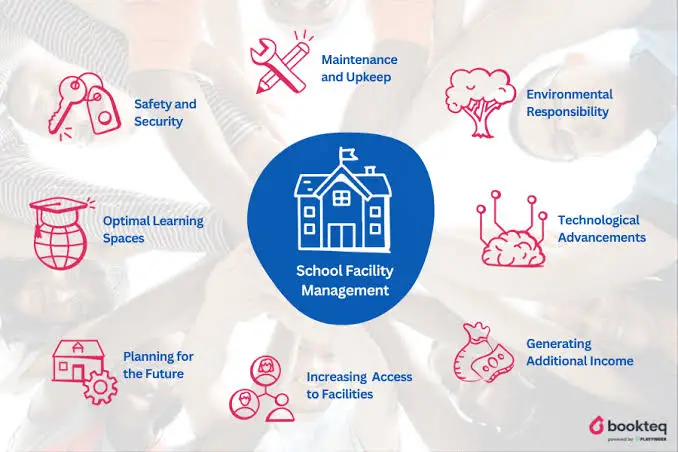
Walk through almost any school, college, or university campus and you’ll find the same quiet tension: buildings that need constant attention, and teams that never have quite enough budget, staff, or hours to give it to them. Educational facility maintenance sits at the center of that tension, because a campus is not just real estate.
Author Archives: Anns Ahmad

Parents at a private school are paying for more than instruction. They are paying for an environment: a warm classroom in January, a gym floor without soft spots, a science lab that passes inspection, and a campus that looks cared for on tour day. Because of that, private school facility maintenance is closely tied to
Preventive maintenance is often discussed as though it exists on its own: a set of tasks, an interval, a checklist, a technician. But in any facility with more than a few dozen assets, PM doesn’t function in isolation. It sits on top of something larger — a structured record of every asset, where it lives,

Ask five facilities managers to define scheduled maintenance and preventive maintenance and you’ll likely get five slightly different answers. Some use the terms interchangeably. Some treat scheduled maintenance as a subset of preventive maintenance. Others draw a hard line between them based on how the work is triggered. The confusion is understandable, because both terms
If you’re new to maintenance planning, the terminology alone can feel like a wall — PM, CBM, PdM, MTBF, CMMS. Underneath the acronyms, though, the basics of preventive maintenance are actually straightforward. This guide starts from zero and walks through everything a beginner needs to understand before building their first PM program: what preventive maintenance
Every facilities and maintenance leader eventually asks the same question: is our maintenance program actually working, or are we just reacting to whatever breaks next? The answer usually comes down to one thing — whether preventive maintenance (PM) is genuinely built into how the team operates, or whether it exists only on paper. Preventive maintenance

Ask any maintenance manager whether preventive maintenance is worth doing, and you’ll get the same answer every time: obviously. Nobody argues against catching a worn bearing before it seizes, or replacing a cracked belt before it snaps mid-shift. The importance of preventive maintenance isn’t really up for debate. And yet, pull the actual work order
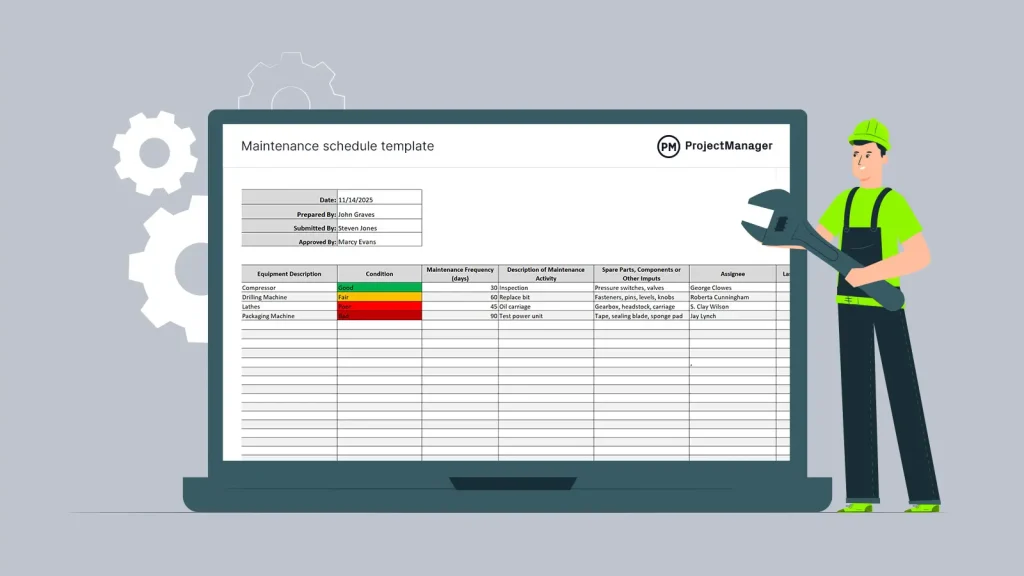
A blank spreadsheet is usually where a maintenance manager starts when they’re told to “get PM under control.” It rarely stays blank for long, and it rarely stays useful for long either. Rows get added ad hoc, columns get repurposed, and within a few months nobody fully trusts what’s on the sheet. The fix isn’t
Somewhere in your maintenance records is a piece of equipment that has failed the same way three times this year. Each time, someone patched it, logged the repair, and moved on to the next fire. Nobody stopped to ask why a “preventive” program let the same failure happen three times, because nobody had time to

Most maintenance teams don’t decide to start a preventive maintenance program on a calm Tuesday. They decide it at 2 a.m., standing next to a machine that just went down for the third time this quarter, wondering why nobody caught it sooner. That moment is usually the easy part. Knowing how to start a preventive